Best Programming Courses For Beginners Online is the perfect starting point for anyone looking to dive into the world of coding. With technology shaping our lives more than ever, understanding programming not only enhances your problem-solving skills but also opens doors to numerous career opportunities. Learning programming online offers flexibility and access to a wealth of resources, making it easier than ever for beginners to find their footing in various programming languages.
This guide will walk you through how to choose the best programming courses, explore popular platforms, and highlight beginner-friendly languages, ensuring you have everything you need to embark on your programming journey.
Introduction to Programming for Beginners
Programming is the process of creating a set of instructions that a computer can follow to perform specific tasks. In today’s digital world, where technology influences every aspect of our lives—from the apps on our smartphones to the algorithms that drive social media—understanding programming is essential. It empowers individuals to create their own software, automate repetitive tasks, and solve complex problems efficiently.
As industries increasingly rely on technology, the demand for programming skills continues to grow, making it a valuable asset for anyone looking to enter the job market or enhance their current career path.
Learning programming online offers beginners unparalleled flexibility and accessibility. Online courses allow students to learn at their own pace, fitting their education around busy schedules. Moreover, the vast array of resources available—from video tutorials to interactive coding exercises—cater to different learning styles, making it easier for novices to grasp core concepts. This approach removes geographical barriers, enabling learners from around the world to access quality education from reputable instructors and institutions.
Furthermore, online platforms often provide community support, allowing learners to collaborate and share knowledge, which can be incredibly motivating and beneficial.
Programming Languages Suitable for Beginners
When starting out in programming, choosing the right language is crucial for building a solid foundation. Several programming languages are particularly well-suited for beginners due to their simplicity and widespread use. The following are some popular options that newcomers can explore:
- Python: Known for its readability and straightforward syntax, Python is an excellent choice for beginners. It is widely used in web development, data analysis, artificial intelligence, and automation, making it versatile for various applications.
- JavaScript: As the backbone of web development, JavaScript allows learners to create dynamic and interactive web pages. It’s essential for front-end development and is increasingly used on the server-side with Node.js.
- Ruby: With its elegant syntax, Ruby is designed to make programming enjoyable and easy to read. It powers the Ruby on Rails framework, a popular choice for building web applications.
- Scratch: This visual programming language is tailored for younger audiences or absolute beginners. Scratch uses a block-based interface to teach the fundamentals of coding without the complexities of syntax.
- HTML/CSS: While not programming languages in the traditional sense, HTML and CSS are essential for web development. HTML structures content on the web, while CSS styles it, providing a great introduction to coding.
Understanding these languages and their applications can help beginners make informed decisions about their learning journey and future projects. Each language opens up different avenues for exploration and career opportunities.
Criteria for Selecting the Best Programming Courses
When diving into the world of programming, choosing the right online course can significantly impact your learning experience and outcomes. Several essential factors come into play when selecting a programming course that not only fits your needs but also enhances your skill acquisition effectively. Understanding these criteria will help you navigate the vast array of options available and make an informed decision.One of the most crucial aspects to consider when evaluating online programming courses is the feedback from previous students.
Course reviews and ratings provide insight into the course’s effectiveness and quality. They reflect the experiences of learners who have gone through the program and can highlight both its strengths and weaknesses. By examining this feedback, potential students can gauge whether the course material resonates with their learning style and goals.
Importance of Course Reviews and Ratings
Course reviews and ratings serve as a valuable resource for prospective students. They offer real-world testimonials that can reveal important information about the course structure, instructor quality, and overall satisfaction. It’s essential to consider not just the average rating but also the content of the reviews. Here are key points to assess:
- Instructor Expertise: Look for feedback regarding the instructor’s knowledge and ability to teach complex topics clearly.
- Course Engagement: Reviews often indicate whether the course keeps students engaged and motivated throughout.
- Support and Resources: Feedback can reveal how accessible support is during the course and if additional resources are provided for further learning.
- Outcome Success: Consider comments on how the course helped students land jobs or projects post-completion, indicating its practical value.
The impact of course content and structure on a beginner’s learning path cannot be overstated. A well-organized course that follows a logical progression will facilitate a smoother learning experience. Here are some critical factors to examine:
Significance of Course Content and Structure
A comprehensive curriculum aligned with beginner needs is essential for effective learning. A course should cover fundamental concepts before advancing to more intricate topics. The structure should foster cumulative knowledge and skills. Here are some aspects to assess:
- Curriculum Breadth: Ensure that the course covers a wide range of essential topics, including programming fundamentals, algorithms, and problem-solving methods.
- Hands-On Practice: Look for courses that integrate practical exercises and projects to apply theoretical knowledge in real-world scenarios.
- Learning Pace: A good course should allow flexibility in learning speed, accommodating both fast learners and those who may need more time.
- Supplementary Materials: Check if the course provides additional resources like video lectures, reading materials, and quizzes for deeper understanding.
In summary, selecting the best programming course for beginners involves careful consideration of course reviews, ratings, content structure, and the overall learning experience. By focusing on these criteria, learners can identify courses that not only teach programming but also inspire confidence in their coding abilities.
Top Online Platforms for Programming Courses
The rise of online learning has opened a plethora of opportunities for beginners looking to dive into programming. With diverse platforms available, it’s crucial to choose one that not only fits your learning style but also provides quality content and community support. This section Artikels the most popular platforms for programming courses, highlighting their unique features and benefits for learners.
Popular Online Platforms Offering Programming Courses
When it comes to learning programming online, several platforms stand out due to their comprehensive course offerings and user-friendly interfaces. Below is a comparison of some of the best platforms available to beginners:
| Platform | Course Variety | Pricing | Certificate of Completion | Community Support | Unique Features |
|---|---|---|---|---|---|
| Coursera | Extensive | Free/Paid | Yes | Forums and Peer Reviews | Courses from Top Universities |
| edX | Wide Range | Free/Paid | Yes | Community Forums | University-Level Courses |
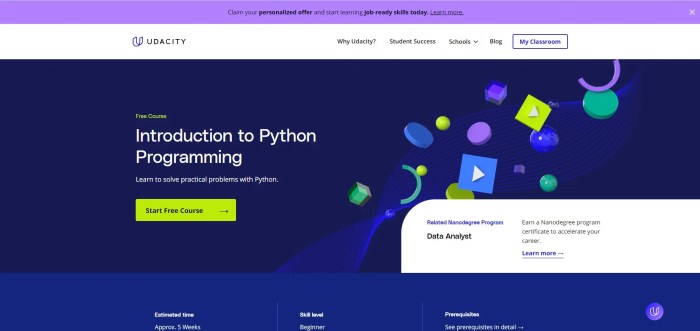
| Udacity | Specialized | Paid | Yes | Slack Channels | Nanodegree Programs |
| Codecademy | Focused | Free/Paid | Yes | Community Q&A | Interactive Coding Exercises |
| Pluralsight | Broad | Paid | Yes | Discussion Boards | Skill Assessments and Paths |
Each platform has its own unique selling points that appeal to beginners. Coursera offers a vast selection of courses from prestigious universities, which not only ensures high-quality content but also adds credibility to your learning journey. Their flexible course structure allows learners to engage at their own pace.
- edX similarly collaborates with top institutions, providing university-level courses that often mimic traditional classroom settings, complete with comprehensive resources and community discussions.
- Udacity specializes in tech skills with a focus on career advancement. Their Nanodegree programs are designed in collaboration with tech companies, ensuring that the skills learned are directly applicable in the job market.
- Codecademy is particularly appealing for its interactive approach, allowing beginners to learn by doing. This hands-on experience can significantly enhance retention and understanding of programming concepts.
- Pluralsight offers a vast library of tech courses with personalized learning paths, helping beginners to follow a structured approach to mastering programming skills while also being assessed regularly to ensure progress.
“Choosing the right platform can profoundly impact your learning experience and career trajectory in programming.”
Each of these platforms brings something unique to the table, ensuring that no matter your learning style or goals, there’s an option that will suit your needs as you embark on your programming journey.
Recommended Programming Languages for Beginners: Best Programming Courses For Beginners Online
When starting a journey in programming, choosing the right language can significantly enhance the learning experience. Selecting beginner-friendly languages not only simplifies the learning curve but also ensures that learners can quickly grasp foundational concepts and start building projects. Below are some of the most recommended programming languages for beginners along with their uses and project examples.
Python
Python is often hailed as one of the most beginner-friendly programming languages. Its syntax is clean and easy to read, which helps new programmers focus on learning programming concepts rather than struggling with complex syntax rules. Python is widely used in various fields, including web development, data analysis, artificial intelligence, and automation.
Key Reasons for Suitability
Simple and readable syntax.
A vast collection of libraries and frameworks.
Strong community support and numerous learning resources.
Project Examples
Building a simple web application using Flask or Django.
Data analysis and visualization using Pandas and Matplotlib.
Creating automation scripts to perform repetitive tasks.
JavaScript
JavaScript is essential for web development, making it a fantastic choice for beginners interested in creating interactive websites. It runs in all web browsers and allows for immediate feedback while coding, which is helpful for new learners.
Key Reasons for Suitability
Easily integrates with HTML and CSS, the core technologies of the web.
Enables immediate visualization of results in a browser.
A large ecosystem with various frameworks like React and Angular.
Project Examples
Developing a personal portfolio website.
Creating interactive web applications or games.
Building a to-do list app with local storage functionality.
Ruby
Ruby, known for its elegant syntax, is another excellent choice for beginners, particularly due to the Ruby on Rails framework, which simplifies web application development. It prioritizes simplicity and productivity, making it a favorite among new developers.
Key Reasons for Suitability
Readable and expressive syntax.
Strong focus on convention over configuration.
Engaging community that encourages learning.
Project Examples
Developing a blog application using Ruby on Rails.
Creating an online store or e-commerce site.
Building a web-based task manager.
Scratch
Scratch is a visual programming language aimed at beginners, particularly children. It uses a block-based interface where users can drag and drop code blocks to create programs. This approach teaches programming logic without the need to write code.
Key Reasons for Suitability
Intuitive interface that minimizes syntax errors.
Encourages creativity and experimentation.
Ideal for visual learners and younger audiences.
Project Examples
Creating interactive stories or animations.
Developing simple games.
Designing educational projects to teach others programming concepts.
“Choosing the right programming language can empower beginners to embark on their coding journey with confidence and creativity.”
Overview of Popular Programming Courses
The world of programming offers a vast array of courses tailored for beginners, designed to ease their entry into the tech realm. These courses encompass various languages and concepts, providing foundational skills that are essential for budding developers. Below is a compilation of some of the most highly-rated programming courses available online, each with its unique offerings and teaching methodologies.
Highly-Rated Programming Courses for Beginners
Understanding the strengths and scope of various programming courses can help beginners choose the right one for their learning journey. Below is a list of exceptional courses along with what they offer and the skills they cultivate.
-
Codecademy’s Learn Python 3
This interactive course covers the basics of Python programming, including syntax, control structures, functions, and data structures. By the end, learners gain proficiency in writing Python scripts and developing basic applications.
“Python is a powerful programming language used in various fields, from web development to data science.”
-
Udemy’s The Complete JavaScript Course 2023
This comprehensive course introduces JavaScript from scratch. Topics include variables, functions, events, and the Document Object Model (DOM). Students develop skills to create dynamic web applications and enhance user interaction.
“JavaScript is essential for modern web development, making it a must-learn language for aspiring developers.”
-
Coursera’s Programming for Everybody (Getting Started with Python)
Offered by the University of Michigan, this course emphasizes the principles of programming and Python basics. It is designed for complete novices and focuses on reading and writing code, emphasizing problem-solving skills.
“This course empowers beginners to think like a programmer, fostering critical coding skills.”
-
edX’s CS50’s Introduction to Computer Science
This renowned course from Harvard covers fundamental concepts of computer science, programming in C, Python, and SQL, and web development basics. Learners develop a strong foundation in algorithms and data structures.
“CS50 is a rigorous yet accessible course that opens doors to various fields within computer science.”
-
FreeCodeCamp’s Responsive Web Design Certification
This course focuses on HTML, CSS, and the principles of responsive design. It equips learners with the skills to build visually appealing websites that work across different devices.
“Responsive web design is crucial for creating user-friendly experiences in today’s mobile-driven world.”
The teaching methods employed in these courses often blend video lectures, interactive exercises, and real-world projects, allowing students to apply what they’ve learned practically. These practical applications reinforce theoretical knowledge, making the learning experience comprehensive and engaging.
Learning Paths and Strategies for Beginners
Embarking on the journey of programming can be both exciting and daunting for beginners. A structured learning path and effective strategies are essential for navigating the complexities of coding. By following a streamlined approach, beginners can build a solid foundation, enhance their skills progressively, and maintain their enthusiasm throughout the learning process.
Effective Learning Strategies for Beginners
Understanding how to learn effectively is crucial for beginners in programming. Here are some strategies that can enhance the learning experience:
- Set Clear Goals: Establish specific, measurable, achievable, relevant, and time-bound (SMART) goals to guide your learning journey.
- Hands-on Practice: Engage in coding exercises and projects to apply theoretical knowledge in practical scenarios. Websites like Codecademy and freeCodeCamp offer excellent interactive coding challenges.
- Utilize Online Resources: Take advantage of free and paid courses, tutorials, and documentation available on platforms like Coursera, Udacity, and YouTube.
- Join a Community: Engage with other learners through forums, online communities, or local meetups. Platforms like Stack Overflow or Reddit can provide support and insight.
Structured Learning Path for Beginners
A structured learning path helps beginners understand which skills to acquire and in what order. Below is a recommended path for beginners to follow:
1. Introduction to Programming Concepts
Start with the basics of programming including variables, data types, and control structures. Languages like Python or JavaScript are beginner-friendly.
2. Learn Version Control Systems
Familiarize yourself with Git and GitHub to manage code versions and collaborate effectively.
3. Web Development Basics
Understand HTML, CSS, and basic JavaScript for front-end development. Building simple web pages will solidify your understanding.
4. Explore Data Structures and Algorithms
Delve into fundamental data structures (arrays, lists, trees) and algorithms (searching, sorting) to enhance problem-solving skills.
5. Choose a Specialization
Decide on a path such as web development, data science, or mobile app development. Focus on relevant languages and frameworks.
6. Build Projects
Create personal or open-source projects to apply learned skills and build a portfolio that showcases your work.
Maintaining Motivation and Overcoming Challenges
Learning programming can present its fair share of challenges. Staying motivated is crucial, and here are some tips to help deal with obstacles:
Break Down Tasks
Large projects can be overwhelming. Break them into smaller, manageable tasks that can be completed incrementally.
Celebrate Small Wins
Recognize and reward yourself for achieving milestones, whether it’s completing a course or solving a difficult problem.
Stay Curious
Keep the excitement alive by exploring different topics and projects that interest you. This encourages continuous learning.
Seek Help When Stuck
Don’t hesitate to reach out for help when encountering obstacles. Online communities and mentors can provide valuable guidance.
Maintain a Balanced Routine
Ensure you take breaks and avoid burnout. A balanced approach to learning promotes better retention and understanding.By implementing these learning paths and strategies, beginners can navigate their programming journey with confidence and enthusiasm, paving the way for future success in the tech industry.
Community and Support Resources
In the world of programming, having a robust support system can make a significant difference in your learning experience. As a beginner, engaging with online communities and forums can provide you with valuable insights, resources, and connections that enhance your understanding of programming concepts. These platforms not only facilitate knowledge sharing but also foster a sense of belonging among learners striving for similar goals.Utilizing mentorship and peer support is essential in overcoming the challenges that often accompany the learning process.
A supportive network can offer guidance, motivation, and practical advice, making the journey less daunting. Here are some key resources and communities that can provide the necessary support and additional learning opportunities for beginners:
Online Communities and Forums
Joining programming communities online can help beginners find answers to their questions and connect with more experienced developers. Here are some notable platforms where you can seek help:
- Stack Overflow: A well-known forum where programmers ask and answer coding-related questions. The community is vast and covers a wide range of programming languages.
- Reddit: Subreddits like r/learnprogramming and r/programming offer discussions, resources, and advice from fellow learners and seasoned programmers alike.
- FreeCodeCamp Forum: A supportive space where users can share their projects, seek feedback, and ask questions about various programming challenges.
- Dev.to: A community of software developers where you can share your writing, ask questions, and engage in discussions on a variety of programming topics.
The Importance of Mentorship, Best Programming Courses For Beginners Online
Mentorship plays a crucial role in the growth of a beginner programmer. Having a mentor can provide personalized guidance, clarifying complex concepts and helping navigate career paths in tech. The benefits of mentorship include:
- Expert Insights: Mentors offer industry insights that can help you understand real-world applications of programming skills.
- Networking Opportunities: They can introduce you to professional networks, which is valuable for internships and job opportunities.
- Moral Support: Mentors encourage and motivate you during challenging times, helping to maintain your enthusiasm for learning.
Additional Learning and Practice Resources
Beyond community support, various platforms can offer additional learning materials and practice opportunities to solidify your programming skills. Here are some recommended resources:
- Codecademy: An interactive platform offering courses in various programming languages, ideal for hands-on learning.
- LeetCode: A platform for practicing coding problems and preparing for technical interviews. It helps build problem-solving skills essential for programmers.
- HackerRank: Offers coding challenges and competitions that can enhance your skills while providing a fun, gamified experience.
- GitHub: A great resource for collaborating on projects, exploring open-source code, and gaining real-world experience through contributions.
“Engaging with a community and seeking mentorship are key components of a successful programming journey.”
Tools and Software for Programming
To begin your programming journey, having the right tools and software is crucial. These tools not only enhance productivity but also make coding easier and more efficient for beginners. Below, we will explore the essential tools every aspiring developer should install and how integrated development environments (IDEs) can facilitate your learning process.
Essential Tools for Beginners
Before diving into programming, it’s important to equip your computer with the necessary tools. Here’s a list of essential software that beginners should consider installing:
- Text Editor: A basic text editor like Visual Studio Code or Sublime Text provides a simple interface for writing code.
- Version Control System: Git is essential for managing changes in your projects and collaborating with others.
- Integrated Development Environment (IDE): IDEs such as PyCharm or Eclipse offer powerful tools for writing and debugging code.
- Browser Developer Tools: Browsers like Chrome have built-in tools that allow developers to test and debug website code.
- Command Line Interface (CLI): Familiarity with the command line is important for navigating your computer’s file system and running scripts.
These tools provide a strong foundation for coding, allowing new programmers to explore various languages and frameworks.
Usage of Integrated Development Environments (IDEs)
IDEs are software applications that provide comprehensive facilities to programmers for software development. They typically include a source code editor, build automation tools, and a debugger. For beginners, IDEs can greatly simplify the coding process. IDEs offer features like syntax highlighting, code completion, and error detection, which help reduce the chances of bugs in your code. These functionalities allow beginners to focus more on learning programming concepts rather than getting bogged down by syntax errors.
Additionally, many IDEs come with built-in support for version control, which streamlines collaboration and project management. This is particularly beneficial when working on larger projects or in teams.
Comparison of Different Tools
To choose the right tools, it’s helpful to compare their functionalities and user-friendliness. The table below provides an overview of popular programming tools, highlighting their key features:
| Tool | Functionality | User-Friendliness |
|---|---|---|
| Visual Studio Code | Code editing, debugging, Git integration | Very easy to use, customizable interface |
| PyCharm | Python development, debugging, testing | Friendly for beginners but can be overwhelming with features |
| Sublime Text | Lightweight code editor, multiple selections | Simple interface, quick learning curve |
| Eclipse | Java development, project management | Moderate complexity, powerful but requires time to learn |
| Atom | Customizable text editor, GitHub integration | User-friendly, extensive package library |
By analyzing these tools, beginners can make informed decisions on which software will best support their programming endeavors. Understanding the functionality and user-friendliness of each tool can significantly enhance the learning experience and project outcomes.
Real-World Applications of Programming Skills
Programming skills have become increasingly essential across various industries, fundamentally transforming how businesses operate and individuals engage with technology. From web development to data analysis, the applications of programming are vast and varied. As technology continues to evolve, the demand for proficient programmers who can solve real-world problems through code is at an all-time high.One of the most compelling aspects of programming is its versatility.
Skills acquired through programming courses can be applied to numerous fields such as finance, healthcare, education, and entertainment. By understanding the principles of programming, individuals can innovate solutions that enhance efficiency, improve user experience, and drive business success. Below, we explore several practical applications of programming knowledge through specific projects and success stories.
Projects Demonstrating Practical Applications
Engaging in real-world projects is a fantastic way to apply programming skills. These projects not only solidify understanding but also demonstrate the utility of coding in various domains. Here are some notable examples:
- Web Development: Building websites for local businesses or creating personal blogs can illustrate the fundamentals of HTML, CSS, and JavaScript. For instance, a beginner might create an e-commerce site for a small shop, integrating functionalities like product listings and shopping carts.
- Data Analysis: Using Python or R to analyze datasets can lead to significant insights. A project could involve analyzing public health data to track disease outbreaks, helping local authorities respond more effectively.
- Mobile App Development: Designing an app that assists users in daily tasks showcases the application of programming in mobile technology. An example includes a personal finance app that helps users budget their spending.
- Game Development: Developing simple games using platforms like Unity or Unreal Engine allows beginners to apply logic and creativity. A successful project might be a puzzle game that engages users and teaches programming concepts through game mechanics.
Success Stories of Beginners in Programming
Numerous individuals have transformed their lives by leveraging programming skills, starting from beginner courses to achieving remarkable success in their careers. These stories illustrate the potential impact of programming on personal and professional development.
“Learning to code opened up a world of opportunities for me that I never knew existed.” – A successful software engineer who transitioned from a non-technical background.
One notable success is that of a young woman who began learning programming through online courses while working as a barista. After dedicating her time to mastering web development, she landed a junior developer role at a tech startup. Within a few years, she advanced to a senior position, contributing to significant projects that increased company revenue.Another inspiring story involves a former teacher who embraced data analysis to improve educational outcomes in her community.
By learning Python and SQL, she developed an application that analyzed student performance data, allowing educators to tailor their teaching methods effectively. Her project gained attention from local school districts, leading her to a new career path in educational consultancy.These examples highlight that with dedication and the right resources, beginners can not only learn programming but also apply it in ways that lead to meaningful career advancements and community impact.
Last Recap
In summary, the landscape of programming is broad and filled with opportunities for beginners willing to learn. By selecting the right course, understanding the various programming languages, and engaging with supportive communities, you can build a strong foundation in coding. So, whether you aspire to develop apps, create websites, or work on innovative tech projects, the resources available today can set you on the path to success.
Common Queries
What are the best programming languages for beginners?
Some of the best programming languages for beginners include Python, JavaScript, and Ruby, known for their readability and ease of use.
How long does it take to learn programming?
The time it takes to learn programming varies by individual and commitment level, but generally, you can grasp the basics in a few months.
Are online programming courses worth it?
Yes, online programming courses are often affordable, flexible, and allow you to learn at your own pace, making them a great option for beginners.
Do I need prior experience to take programming courses?
No prior experience is required for most beginner programming courses; they are designed to cater to those just starting out.
What support is available for online learners?
Many online courses provide forums, mentorship, and community groups where learners can ask questions and share experiences.

I am a professional writer with more than a decade of experience in creative and educational writing. Since the beginning of my career, I have been dedicated to developing works that are not only informative but also capable of providing deep understanding for readers from various backgrounds.