Student Loan Forgiveness Programs USA Eligibility is a topic of great importance for many borrowers seeking relief from their student loan burdens. These programs can offer a fresh start, but understanding the ins and outs of eligibility is crucial for those who hope to benefit from them. With various options available, each with its own criteria and application processes, getting a clear picture of what you qualify for can be the key to financial freedom.
The landscape of student loan forgiveness in the USA is diverse, with programs designed to help specific professions, such as teachers and public service workers. By looking into the historical context and purpose of these initiatives, we can appreciate their impact on borrowers and the overall educational landscape in the country.
Overview of Student Loan Forgiveness Programs in the USA
Student loan forgiveness programs in the United States are designed to alleviate the burden of student debt for borrowers who meet specific criteria. These programs aim to support individuals in various professions or those who have made significant contributions to their communities. Over the years, the government has established several forgiveness options to assist borrowers in achieving financial relief while promoting careers in high-need areas.The main types of student loan forgiveness programs available include Public Service Loan Forgiveness (PSLF), Teacher Loan Forgiveness, and Income-Driven Repayment (IDR) plan forgiveness.
Each program has distinct eligibility requirements and benefits tailored to specific professions or financial circumstances. The historical context of these programs dates back to the Higher Education Act of 1965, which aimed to make college more accessible, eventually leading to debt relief initiatives as student loan debt began to rise dramatically.
Types of Student Loan Forgiveness Programs
Understanding the various student loan forgiveness programs is essential for borrowers to make informed decisions about their loan repayment strategies. Here’s a look at some key programs:
- Public Service Loan Forgiveness (PSLF): This program forgives the remaining balance on Direct Loans for borrowers who have made 120 qualifying monthly payments while working full-time for a qualifying employer, such as government organizations or non-profits.
- Teacher Loan Forgiveness: Teachers who work in low-income schools or educational service agencies may qualify for forgiveness of up to $17,500 on their Direct or Stafford Loans after five consecutive years of teaching.
- Income-Driven Repayment (IDR) Forgiveness: Borrowers enrolled in IDR plans may have their remaining loan balance forgiven after 20 or 25 years of qualifying payments, depending on the plan.
- Perkins Loan Cancellation: Certain professions, such as teachers, nurses, or law enforcement officers, can have their Perkins Loans cancelled after meeting specific service requirements.
Statistics indicate that millions of borrowers are potential beneficiaries of these programs. As of 2021, estimates suggested that nearly 8 million borrowers could qualify for some form of forgiveness, which could significantly impact their financial futures.
In the U.S., student loan debt exceeded $1.7 trillion, underscoring the importance of forgiveness programs for many borrowers.
The expansion and clarification of these programs continue to evolve as policymakers address the ongoing student debt crisis, aiming for equitable solutions that support borrowers across the country.
Eligibility Criteria for Student Loan Forgiveness
Navigating the eligibility criteria for student loan forgiveness programs can be complex, but understanding these requirements is crucial for those seeking relief from student debt. These programs are designed to help specific groups of individuals who dedicate their careers to public service or who meet certain financial criteria. To qualify for student loan forgiveness, borrowers generally need to fulfill some basic requirements that vary depending on the specific program.
Below is a detailed overview of these eligibility criteria, including the important factors that can influence your qualification.
General Eligibility Requirements
Most student loan forgiveness programs share common eligibility requirements that applicants must meet. These often include:
- Loan Type: Only certain types of federal student loans are eligible for forgiveness, such as Direct Loans, and not all federal loans qualify.
- Payment History: Borrowers typically need to have made a minimum number of qualifying payments, which can vary by program.
- Employment Status: Many forgiveness programs require borrowers to work in specific fields or for qualifying employers.
- Repayment Plans: Borrowers must usually be on a qualifying repayment plan, such as income-driven repayment plans.
Specific Groups Qualifying for Forgiveness
Certain professions are recognized for their contributions to society, and many student loan forgiveness programs are tailored to support these individuals. Key groups include:
- Teachers: Educators who work in low-income schools or subjects can qualify for the Teacher Loan Forgiveness Program.
- Nurses: Registered nurses working in underserved areas may be eligible for loan forgiveness through programs like the Nurse Corps Loan Repayment Program.
- Public Service Workers: Those employed by government or non-profit organizations can qualify for Public Service Loan Forgiveness (PSLF) after making 120 qualifying payments.
Impact of Income and Repayment Plans
Income plays a significant role in determining eligibility for many forgiveness programs. Programs often base forgiveness on income-driven repayment plans, which adjust monthly payments according to a borrower’s income and family size.
Income-driven repayment plans can significantly reduce your monthly payment, making it easier to meet the payment requirements for forgiveness.
Furthermore, borrowers must be enrolled in qualifying repayment plans to accumulate the necessary number of payments. The income level also plays a part in determining how quickly a borrower can reach forgiveness, as those with lower incomes may find that their payments are reduced, allowing for a more manageable path towards loan forgiveness. Ultimately, understanding these criteria is essential for borrowers to take advantage of available student loan forgiveness opportunities.
Types of Student Loan Forgiveness Programs: Student Loan Forgiveness Programs USA Eligibility
Student loan forgiveness programs are designed to alleviate the financial burden on borrowers, especially those dedicating their careers to public service, education, and specific types of employment. Understanding the various programs available can help borrowers make informed decisions regarding their student loans.The U.S. Department of Education offers several federal student loan forgiveness programs aimed at providing relief under certain conditions.
These programs typically require borrowers to meet specific eligibility criteria and fulfill certain obligations, such as working in public service or teaching in high-need areas. Below are examples of prominent federal student loan forgiveness programs available:
Federal Student Loan Forgiveness Programs
The following programs provide opportunities for student loan forgiveness based on specific employment and repayment conditions:
- Public Service Loan Forgiveness (PSLF): Available to borrowers who work full-time for a qualifying employer, such as government agencies or non-profit organizations. After making 120 qualifying monthly payments under a qualifying repayment plan, borrowers may have the remaining balance of their Direct Loans forgiven.
- Teacher Loan Forgiveness: Designed for teachers who work in low-income schools or educational service agencies. Eligible applicants may receive forgiveness of up to $17,500 on their Direct or Stafford Loans after teaching for five consecutive years.
- Income-Driven Repayment (IDR) Forgiveness: Under IDR plans, borrowers may qualify for forgiveness after making payments for 20 or 25 years, depending on the specific plan. Remaining loan balances are forgiven after the payment period ends.
Comparison of PSLF and Teacher Loan Forgiveness
Public Service Loan Forgiveness and Teacher Loan Forgiveness serve similar purposes but differ in eligibility requirements and forgiveness amounts. Here’s a comparison of the two programs:
| Feature | Public Service Loan Forgiveness (PSLF) | Teacher Loan Forgiveness |
|---|---|---|
| Eligibility Criteria | Full-time employment with a qualifying public service employer | Full-time teaching in a low-income school or educational service agency |
| Time Requirement | 120 qualifying monthly payments | 5 consecutive years of teaching |
| Forgiveness Amount | Remaining balance of Direct Loans forgiven | Up to $17,500 on eligible loans |
| Loan Types | Direct Loans | Direct Loans and Stafford Loans |
The differences between PSLF and Teacher Loan Forgiveness highlight how specific professional paths can influence the type and amount of forgiveness available. Understanding these distinctions allows borrowers to navigate their options effectively and choose the path that aligns with their career goals and financial situations.
Application Process for Forgiveness Programs

Navigating the application process for student loan forgiveness programs can seem daunting, but breaking it down into manageable steps makes it more approachable. Understanding the specific requirements and preparing adequately is essential for a successful application. With the right information, borrowers can enhance their chances of receiving forgiveness.The application process involves several key steps that borrowers must follow to ensure their eligibility and submission of the necessary documentation.
It’s important to be well-informed about these requirements to avoid any delays or issues with your application.
Steps to Apply for Student Loan Forgiveness
The following steps Artikel the process borrowers should follow when applying for student loan forgiveness programs, ensuring they meet all necessary criteria:
- Determine Eligibility: Review the specific requirements for the forgiveness program you are applying for. Different programs have varied eligibility criteria based on employment, loan type, and repayment plans.
- Gather Documentation: Collect all necessary documentation, including proof of income, employment verification, and loan information. Ensure that all documents are accurate and up-to-date.
- Complete the Application Form: Fill out the required application form for the forgiveness program. This may involve providing personal information, loan details, and employment history.
- Submit the Application: Send your completed application along with the required documentation to the appropriate loan servicer or agency. Verify submission methods and deadlines.
- Follow Up: After submission, monitor the status of your application. If additional information is requested, respond promptly to avoid delays.
Checklist for Borrowers
Using a checklist can help borrowers ensure they meet all necessary criteria before applying for student loan forgiveness. Here’s a useful checklist to consider:
- Confirm that you are enrolled in an eligible repayment plan.
- Ensure your loans are eligible for forgiveness under the program.
- Verify your employment with a qualifying employer, if applicable.
- Gather all required documentation, including income and employment verification.
- Review your application for accuracy before submission.
Potential Challenges and Solutions, Student Loan Forgiveness Programs USA Eligibility
Applicants may face several challenges during the application process, but being aware of these can help in crafting effective solutions. Here are some common hurdles and tips to navigate them:
“Understanding the process and being proactive in addressing challenges greatly increases the chances of a successful application.”
- Incorrect Documentation: Ensure that all documents are complete and accurate. Double-check for any missing information, as this can delay processing.
- Eligibility Misunderstandings: Familiarize yourself with the specific requirements of the forgiveness program. Consult official resources or seek assistance if needed.
- Response Delays: If you do not hear back regarding your application in a timely manner, follow up with the loan servicer to ensure your application is being processed.
- Changes in Policy: Stay updated on any changes to forgiveness programs, as policies can change. Regularly visit official websites for the latest information.
Impact of Student Loan Forgiveness on Borrowers
Student loan forgiveness programs have sparked a wave of optimism among many borrowers, transforming their financial futures and emotional well-being. The relief from crippling debt opens doors that were previously shut, allowing individuals to pursue their dreams and live without the constant weight of financial burden. Understanding the multifaceted effects of these programs is crucial for both current borrowers and those considering their options.The financial impact of student loan forgiveness can be profound.
Eligible borrowers often experience an immediate boost to their disposable income, as they no longer have to allocate significant portions of their earnings to monthly loan payments. This newfound financial freedom enables them to invest in their futures, whether it be through homeownership, further education, or retirement savings. Additionally, the emotional relief from the stress associated with student debt can lead to improved mental health and overall life satisfaction.
Success Stories of Individuals Benefiting from Forgiveness Programs
Numerous borrowers have shared their success stories, highlighting the transformative effects of student loan forgiveness. One such example is Sarah, a teacher who dedicated years to working in underserved communities. After qualifying for the Public Service Loan Forgiveness (PSLF) program, Sarah was able to have her remaining loan balance forgiven after making 120 qualifying payments. This allowed her to purchase her first home, a dream she thought was unattainable due to her previous debt load.Another inspiring story is that of Mark, who pursued a career in social work.
After successfully navigating the income-driven repayment plan and qualifying for forgiveness under the PSLF, he found himself financially stable enough to start his own nonprofit organization. Mark’s journey demonstrates how forgiveness programs can enable individuals to give back to their communities, fostering a cycle of positive change.
Effects on Credit Scores and Future Financial Decisions
The effects of student loan forgiveness extend beyond immediate financial relief; they can also influence credit scores and future financial decisions. When a borrower’s loans are forgiven, it can lead to a boost in their credit score. This is primarily because forgiven loans are considered settled, and the outstanding debt is eliminated. A higher credit score can enhance an individual’s ability to secure favorable loan terms in the future, whether for a car, home, or business.Moreover, the emotional impact of eliminating debt can lead to more confident financial decision-making.
Borrowers may feel empowered to take calculated risks, such as starting a business or investing in education. For instance, Jenna, who had her student loans forgiven, used her financial freedom to further her qualifications and eventually landed a higher-paying job in her field. This illustrates how forgiveness programs can create a ripple effect, fostering not only immediate financial relief but also long-term career growth and financial health.
“Student loan forgiveness not only alleviates financial burdens but also empowers individuals to invest in their future with confidence.”
Common Misconceptions About Student Loan Forgiveness
Many people seeking relief from student loans may hold onto various myths that create confusion about the process of loan forgiveness. Understanding these misconceptions is crucial for borrowers to make informed decisions about their financial futures. By clarifying the realities surrounding student loan forgiveness, borrowers can align their expectations with the actual requirements and outcomes of these programs.One significant aspect of student loan forgiveness is that it often comes with specific eligibility criteria and processes that many are not fully aware of.
Misunderstandings can lead borrowers to believe they will automatically have their loans forgiven or that the process is straightforward without any responsibilities on their part. The following key points illustrate some of the most common misconceptions and the truths behind them.
Key Misconceptions and Realities
The following bullet points highlight prevalent myths associated with student loan forgiveness and the corresponding truths that clarify these misunderstandings:
- Myth: All student loans are eligible for forgiveness.
Truth: Only federal student loans qualify for forgiveness, while private loans are not eligible under current programs. - Myth: Forgiveness is automatic after a set period.
Truth: Borrowers must meet specific criteria and apply for forgiveness; it’s not granted automatically. - Myth: Loan forgiveness eliminates all debt immediately.
Truth: Forgiveness programs may only discharge a portion of the debt depending on the program and the borrower’s repayment history. - Myth: You can simply stop making payments and wait for forgiveness.
Truth: Borrowers must remain in good standing with their loans and continue making payments until notified about forgiveness. - Myth: Working for a nonprofit guarantees loan forgiveness.
Truth: While working for a nonprofit can lead to forgiveness under certain programs, borrowers must still meet specific service and payment requirements. - Myth: Forgiveness affects your credit score negatively.
Truth: Loan forgiveness itself does not have a negative impact on credit scores; however, late payments prior to forgiveness can affect credit standing.
Understanding these misconceptions can empower borrowers to navigate the complexities of student loan forgiveness more effectively. Borrowers should always check their eligibility and stay informed about the various forgiveness programs available to them.
Future of Student Loan Forgiveness Programs
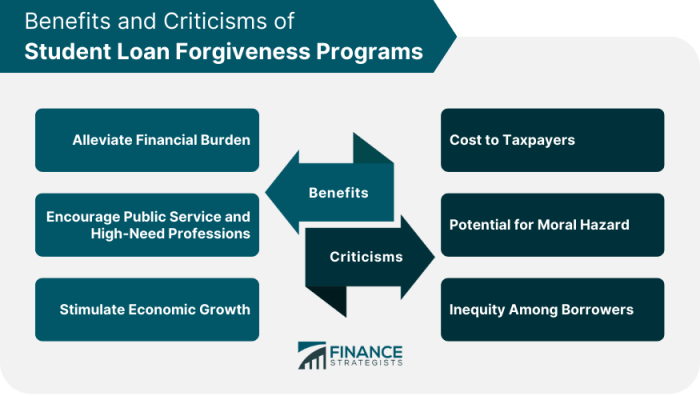
The future of student loan forgiveness programs in the USA is a dynamic landscape shaped by recent legislative changes, ongoing reforms, and advocacy efforts aimed at expanding options for borrowers. As the conversation around student debt continues to gain traction, several factors are influencing the direction of these programs.Recent legislative changes have significantly impacted the structure and availability of student loan forgiveness programs.
For instance, the Biden administration introduced initiatives to streamline processes and expand eligibility under programs like Public Service Loan Forgiveness (PSLF). The temporary waivers aimed at correcting previous discrepancies in borrower eligibility have allowed thousands of borrowers to receive forgiveness who may have otherwise been overlooked. These changes represent a shift towards making forgiveness more accessible, particularly for those in public service careers.
Potential Reforms and Implications for Borrowers
Future reforms in student loan forgiveness programs might include broader eligibility criteria and enhanced benefits. One potential reform could involve lowering the total number of payment years required for forgiveness or implementing income-driven repayment plans that offer more manageable repayment terms.Important aspects of these reforms may include:
- Expansion of Eligibility: Increasing the range of professions that qualify for forgiveness could significantly benefit borrowers in lower-paying fields.
- Automatic Forgiveness Pathways: Streamlining the forgiveness process through automatic forgiveness after a set period could reduce administrative burdens on borrowers.
- Improved Communication: Enhanced outreach and education regarding available programs can help borrowers understand their options and make informed decisions.
Each of these potential reforms aims to alleviate the financial burden of student loans, allowing borrowers to focus more on their careers and less on crippling debt. As legislation evolves, it is critical for borrowers to stay informed about these changes, as they directly affect their financial futures.
“Reforms in student loan forgiveness programs not only shape the financial landscape for borrowers but also influence broader economic conditions by allowing individuals to invest in their futures.”
Advocacy Efforts to Expand Forgiveness Options
Various advocacy groups are actively working to expand student loan forgiveness options. These organizations are pushing for legislative changes that reflect the needs of borrowers, particularly focusing on those who were misled or underserved by existing programs.Key advocacy efforts include:
- Grassroots Campaigns: Mobilizing community groups to raise awareness about the need for comprehensive student loan reform.
- Collaborations with Lawmakers: Partnering with legislators to propose bills aimed at enhancing and expanding forgiveness options.
- Information Dissemination: Providing resources and support to borrowers about their rights and available options, ensuring they are well-informed.
These advocacy efforts are critical in shaping public policy and ensuring that the voices of borrowers are heard. The combined efforts of organizations and engaged citizens can lead to substantial legislative changes that benefit those burdened by student debt.
“The power of advocacy lies in its ability to transform policy and create lasting change in the lives of borrowers seeking relief from student loans.”
Last Recap
In conclusion, navigating the world of Student Loan Forgiveness Programs USA Eligibility may seem daunting at first, but with the right information and guidance, borrowers can uncover opportunities for significant financial relief. As discussions continue around potential reforms and advocacy efforts, staying informed will empower individuals to make the most of their educational investments.
User Queries
Who is eligible for student loan forgiveness?
Eligibility often includes specific professions, such as teachers, nurses, and public service workers, along with meeting certain repayment plan requirements.
How long does it take to apply for loan forgiveness?
The application process can vary, but it often takes several months, depending on the program and the completeness of your application.
Will student loan forgiveness affect my credit score?
Generally, forgiveness might improve your credit score as it reduces your debt-to-income ratio, but it’s essential to check with your lender for specifics.
Can I apply for forgiveness on multiple loans?
Yes, borrowers can apply for forgiveness on different types of loans or programs, provided they meet the eligibility criteria for each.
Are there any tax implications for forgiven loans?
In some cases, forgiven loans may be considered taxable income, so it’s important to consult a tax professional to understand your situation.

I am a professional writer with more than a decade of experience in creative and educational writing. Since the beginning of my career, I have been dedicated to developing works that are not only informative but also capable of providing deep understanding for readers from various backgrounds.