Project Management Certification PMP Online sets the stage for this enthralling narrative, inviting professionals to explore the transformative journey of earning a PMP certification. In today’s competitive job market, such a certification not only enhances credibility but also opens doors to numerous career opportunities. With the evolution of project management methodologies, the significance of this certification has grown, making it a valuable asset for individuals across various industries.
As we delve into the intricacies of the PMP certification process, from eligibility requirements to exam preparation strategies, readers will gain a comprehensive understanding of how to navigate this essential certification path effectively.
Introduction to Project Management Certification PMP Online
Project Management Certification, particularly the Project Management Professional (PMP) certification, holds significant weight in today’s competitive job market. It serves as a benchmark for project management excellence, demonstrating a professional’s commitment and expertise in the field. As organizations increasingly prioritize structured project management frameworks to enhance efficiency and achieve strategic goals, having a PMP certification is more relevant than ever.Over the years, project management methodologies have evolved significantly.
Initially dominated by traditional, linear approaches, the field has embraced a variety of methodologies such as Agile, Scrum, and Lean. This evolution has necessitated changes in certification processes, with the PMP certification adapting to include a broader range of topics and methodologies. The certification now reflects the diverse project landscapes professionals navigate, ensuring that it remains a valuable asset for career advancement.
Benefits of Obtaining PMP Certification
The advantages of pursuing a PMP certification extend across various industries and roles. Professionals who hold this certification often experience enhanced career opportunities, increased earning potential, and greater job security. The following points highlight the key benefits:
- Career Advancement: PMP certification can open doors to higher-level management positions and leadership roles, providing a competitive edge over non-certified peers.
- Increased Earning Potential: Studies consistently show that PMP certified professionals earn significantly more than their non-certified counterparts. According to the Project Management Institute, certified PMPs earn about 20% more on average.
- Global Recognition: The PMP certification is recognized worldwide, ensuring that professionals with this credential can work in various markets and industries, enhancing their global mobility.
- Enhanced Skills and Knowledge: The rigorous training involved in obtaining certification equips professionals with critical project management skills and methodologies that are applicable in real-world scenarios.
- Networking Opportunities: Joining the community of PMP certified professionals opens up numerous networking opportunities, allowing individuals to connect with industry leaders and peers.
“The PMP certification is not just a credential; it is a testament to your dedication to the project management profession and your ability to lead projects to success.”
Eligibility and Requirements for PMP Certification
The Project Management Professional (PMP) certification is a globally recognized credential that demonstrates an individual’s ability to manage projects effectively. To enroll in a PMP certification program, candidates must meet specific educational and professional experience prerequisites that ensure they possess the necessary foundation for success in project management.
Prerequisites for Enrolling in a PMP Certification Program
To be eligible for the PMP certification exam, candidates must fulfill certain educational and professional experience criteria. The following Artikels these requirements:
- For candidates with a four-year degree:
- A minimum of three years (36 months) of project management experience.
- At least 4,500 hours leading and directing projects.
- Completion of 35 hours of project management education.
- For candidates without a four-year degree:
- A minimum of five years (60 months) of project management experience.
- At least 7,500 hours leading and directing projects.
- Completion of 35 hours of project management education.
Application Process for PMP Certification
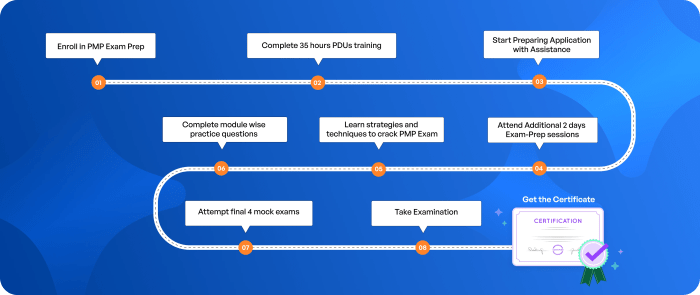
The application process for PMP certification requires careful attention to detail and thorough documentation. Candidates should follow these steps:
1. Eligibility Verification
Ensure that you meet the educational and professional experience prerequisites Artikeld previously.
2. Application Submission
Complete the PMP application on the Project Management Institute (PMI) website. This section includes personal information, project management experience, and education details.
3. Application Review
PMI will review your application to verify eligibility. Be prepared to provide documentation if requested.
4. Payment of Fees
Upon approval of your application, you will be prompted to pay the certification exam fee. This fee varies based on your PMI membership status.
5. Scheduling the Exam
Once payment is confirmed, you can schedule your exam via the PMI website, choosing a date and location that suits you.
Comparative Overview of Eligibility Requirements for Different Project Management Certifications
Understanding the eligibility requirements for various project management certifications can help candidates choose the most suitable path for their careers. Below is a comparison of PMP certification requirements with other popular project management certifications:
| Certification | Education Requirement | Experience Requirement | Project Management Education |
|---|---|---|---|
| PMP | 4-year degree or equivalent | 3 years (36 months) with degree, 5 years (60 months) without degree | 35 hours |
| CAPM | High school diploma or equivalent | No specific experience required | 23 hours |
| PRINCE2 | No formal education required, but understanding of project management principles is beneficial. | No specific experience required for Foundation level; experience recommended for Practitioner level. | No specific requirement |
| PMI-ACP | High school diploma or equivalent | 2,000 hours general project experience; 1,500 hours working on agile teams | 21 contact hours in agile practices |
“PMP certification is a testament to your skills and experience in managing projects effectively, making it a valuable asset in your professional journey.”
Overview of Online PMP Certification Programs
Online PMP certification programs provide a modern solution for project management professionals seeking to enhance their credentials. These programs cater to a broad audience, offering a flexible approach to learning while maintaining the rigor needed to prepare candidates for the PMP exam. With advancements in technology, online courses have become a popular alternative to traditional classroom settings, making it easier to achieve certification without sacrificing work or personal commitments.The structure of online PMP certification programs typically includes a combination of video lectures, interactive quizzes, and extensive reading materials.
Most programs are designed to cover the Project Management Body of Knowledge (PMBOK) Guide thoroughly, ensuring that participants gain a comprehensive understanding of essential project management concepts. Additionally, many of these courses offer practice exams, which are crucial for exam preparation. Below are the core components commonly found in these online programs:
Components of Online PMP Certification Programs
The following components help shape the learning experience in online PMP certification programs:
- Video Lectures: Engaging and informative video content that explains key concepts and methodologies in project management.
- Interactive Quizzes: Short assessments after each module to reinforce learning and gauge understanding of the material.
- Reading Materials: Comprehensive resources, including e-books and articles, that complement video lectures and provide in-depth coverage of topics.
- Discussion Forums: Platforms for students to engage with instructors and peers, facilitating knowledge sharing and networking opportunities.
- Practice Exams: Simulated exam conditions that help candidates familiarize themselves with the exam format and identify areas for improvement.
The flexibility and accessibility of online learning present significant advantages compared to traditional classroom settings. Students can study at their own pace, allowing them to balance their professional responsibilities with their educational pursuits. This flexibility often leads to higher completion rates, as individuals can tailor their study schedule around their personal commitments.
Flexibility and Accessibility of Online Learning
Online learning eliminates geographical barriers, enabling students from various regions to enroll in respected PMP certification programs. Some key benefits include:
- Self-Paced Learning: Candidates can progress through the material at a speed that suits their learning style, allowing for a more personalized educational experience.
- 24/7 Access: Course materials are available around the clock, providing the ability to study whenever it is most convenient.
- Cost-Effective Options: Online programs often have lower tuition fees compared to in-person courses, making certification more accessible to a wider audience.
When selecting an online PMP certification program, the importance of accreditation cannot be overstressed. Accreditation assures candidates that the course meets established standards of quality and rigor. Programs accredited by organizations such as the Project Management Institute (PMI) or other reputable bodies are generally more recognized in the industry.
Importance of Accreditation in Selecting a PMP Online Program
Choosing an accredited program can significantly impact a candidate’s career prospects. Consider the following aspects:
- Industry Recognition: Accredited programs are more likely to be recognized by employers, enhancing job prospects for graduates.
- Quality Assurance: Accreditation ensures that the program adheres to high educational standards, providing candidates with the knowledge and skills necessary for success.
- Access to Resources: Accredited programs may offer additional resources, including networking opportunities and career support, further benefiting graduates in their job search.
In summary, the structure, flexibility, and accreditation of online PMP certification programs play vital roles in shaping a candidate’s learning journey and future career in project management.
Study Materials and Resources for PMP Certification
Preparing for the Project Management Professional (PMP) certification exam can be a daunting task, but with the right study materials and resources, you can ensure a comprehensive understanding of the concepts and practices required. This section will explore essential books, online courses, practice exams, and effective study strategies to help you master the PMP exam content.
Essential Study Materials
A variety of study materials can greatly enhance your understanding and retention of PMP concepts. Here’s a selection of recommended resources:
- The PMBOK Guide
-The Project Management Institute’s official guide is crucial for understanding the framework and processes of project management. - PMP Exam Prep by Rita Mulcahy
-This book is highly regarded for its clear explanations and practical approach to the exam topics. - Head First PMP
-A visually engaging book that breaks down complex concepts into relatable scenarios. - Online Courses (Coursera, Udemy, etc.)
-Interactive courses that often include video lectures, quizzes, and peer discussions to enhance learning. - Practice Exams and Questions
-Essential for familiarizing yourself with the exam format and question types, available through various platforms like PMTraining.
Study Strategies and Tips
Effective study techniques can significantly improve your chances of passing the PMP exam. Here are some strategies to consider:
- Develop a Study Schedule
-Allocate specific times each week for studying to create a routine, ensuring you cover all topics systematically. - Utilize Mind Mapping
-Create visual representations of concepts to aid memory retention and make connections between different areas of project management. - Join Study Groups
-Collaborating with peers can provide diverse insights and foster discussions that reinforce understanding. - Take Mock Exams
-Regularly timed practice exams can help gauge your readiness and identify areas needing improvement. - Focus on Weak Areas
-After taking practice tests, concentrate your efforts on the topics where you scored lower for targeted improvement.
Comparison of PMP Preparation Resources, Project Management Certification PMP Online
Evaluating the various resources available for PMP certification prep can guide your decision on which ones to pursue. The following table summarizes several resources based on their effectiveness and cost:
| Resource | Effectiveness | Cost |
|---|---|---|
| PMBOK Guide | High | $49.95 |
| PMP Exam Prep by Rita Mulcahy | High | $39.95 |
| Head First PMP | Medium | $35.99 |
| Online Courses | High | $29.99 – $199.99 |
| Practice Exams | High | $39.99 |
The right combination of study materials, effective strategies, and practice can greatly enhance your chances of passing the PMP exam.
Exam Preparation Strategies
Preparing for the PMP exam requires a strategic approach that balances time management, disciplined study habits, and thorough practice. As certification is an important milestone for project managers, following effective exam preparation strategies can significantly enhance your chances of success. This segment explores essential techniques to make your study sessions productive and efficient.
Time Management and Study Schedules
Establishing a well-structured study schedule is vital to ensuring comprehensive coverage of the exam material. A good study plan helps in allocating sufficient time to various topics while allowing flexibility to revisit challenging areas.
- Start by assessing the exam content Artikel provided by the Project Management Institute (PMI). Break down the topics into manageable sections based on your strengths and weaknesses.
- Designate specific time slots each day for studying. Consistency in studying helps reinforce learning and retains information better.
- Incorporate review sessions into your schedule. Regularly revisiting previously studied material helps solidify knowledge and improve retention.
“A disciplined study schedule can be your roadmap to success.”
Role of Mock Exams
Mock exams play a crucial role in preparing for the PMP certification test. They simulate the exam environment and help you gauge your readiness.
- Taking practice exams enhances familiarity with the exam structure and timing, reducing anxiety on the actual test day.
- Analyze your performance on mock tests to identify knowledge gaps and adjust your study focus accordingly.
- Utilize various sources for mock exams to experience different question formats and styles, which can help in adapting to the actual exam.
“Mock exams are a critical component of your preparation toolkit.”
Common Mistakes to Avoid
Avoiding common pitfalls during exam preparation can save you time and stress. Here are some mistakes that candidates often make:
- Neglecting the PMBOK Guide: Failing to thoroughly study the PMBOK Guide can lead to gaps in essential knowledge.
- Inconsistent study habits: Irregular studying can result in fragmented knowledge and increased difficulty during the exam.
- Underestimating the importance of rest and breaks: Exhaustion can hamper learning; ensure to take breaks to stay fresh and focused.
“Awareness of common mistakes is the first step to avoiding them.”
Post-Certification Opportunities
Earning a Project Management Professional (PMP) certification is a significant milestone in a career. It opens the door to numerous advancement opportunities that can reshape your professional trajectory. With the growing demand for skilled project managers across various industries, the PMP certification enhances employability and often leads to better job security and higher salaries.The importance of continuing education cannot be overstated for PMP-certified professionals.
Maintaining your certification requires acquiring Professional Development Units (PDUs) through ongoing learning and engagement in the project management community. This commitment to continual improvement not only keeps your skills relevant but also enhances your professional credibility. Networking at PMI events, participating in workshops, and taking advanced courses are excellent ways to stay updated on industry trends.
Career Advancements After Certification
Successfully obtaining your PMP certification can lead to several career advancements and opportunities. As project management becomes a critical component in driving organizational success, those with PMP credentials are often considered for higher-level positions. Here are some key advancements:
- Project Manager Roles: Many professionals advance to senior project manager roles, taking on more complex projects and larger teams. This shift often comes with increased responsibilities and higher salaries.
- Program Manager Positions: PMP certification can pave the way for program management, overseeing multiple projects simultaneously and ensuring alignment with organizational goals.
- Consultancy Opportunities: Certified PMPs are frequently sought after for consultancy roles, providing expertise to organizations looking to improve their project management practices.
- Leadership Roles: Individuals may find opportunities to transition into executive leadership roles, such as Chief Project Officer (CPO), where they can influence project strategy at a corporate level.
“Being PMP certified not only validates your skills but also opens doors you never knew existed.”
Importance of Continuing Education
Continuing education is crucial for PMP-certified individuals to maintain their certification and stay competitive in the fast-evolving project management landscape. Engaging in professional development ensures that project managers don’t just rest on their laurels. They must adapt to new methodologies, tools, and industry changes. Here are essential aspects of continuing education:
- Skill Enhancement: Constant learning helps project managers refine their skills and learn new techniques, improving their project outcomes.
- Networking: Participating in educational resources allows PMPs to connect with peers, share experiences, and exchange knowledge, which can lead to new opportunities.
- Staying Relevant: The project management field continually evolves, and ongoing education helps certified professionals stay updated on best practices and emerging trends.
“Investing in your education is investing in your future—every PDU earned strengthens your professional foundation.”
Success Stories of PMP Professionals
Across various industries, many professionals have leveraged their PMP certification to achieve remarkable career successes. These stories often illustrate the transformative power of the certification. For instance:
- Case of an IT Project Manager: A project manager in the IT sector turned their PMP certification into a promotion to Senior Program Manager, leading projects worth millions and improving team efficiency by 30%.
- Transition to Consulting: Another PMP professional transitioned from a corporate project management role to becoming a highly sought-after consultant, advising companies on agile methodologies and project risk management.
- Cross-Industry Success: A professional started in construction project management and used their PMP to pivot into healthcare project management, successfully leading critical health initiatives during a global pandemic.
These success stories highlight the diverse paths available to PMP-certified individuals and demonstrate the real-world impact of obtaining this credential.
Cost Considerations for PMP Certification
Obtaining the Project Management Professional (PMP) certification is a significant investment in one’s career, with various costs associated with the process. Understanding these costs is crucial for potential candidates who want to plan their finances effectively. Below is a detailed breakdown of the expenses involved, along with potential financial assistance options.
Cost Breakdown for PMP Certification
The journey to achieving PMP certification involves multiple expenses, including training courses, examination fees, and study materials. Candidates should be prepared to allocate funds for each aspect of the certification process. The following points summarize the typical costs involved:
- Training Programs: These can vary widely based on the provider and format (online, in-person). Prices generally range from $800 to $2,500. Online courses tend to be more economical.
- Examination Fees: The fee for taking the PMP exam is $405 for PMI members and $555 for non-members. Membership with PMI also provides additional resources that can aid in preparation.
- Study Materials: Candidates often purchase books, online resources, or practice exams ranging from $50 to $300. Investing in quality study materials can significantly impact exam success.
- Renewal Fees: The PMP certification is valid for three years, requiring 60 professional development units (PDUs) for renewal. The renewal fee is $60 for PMI members and $150 for non-members.
“Investing in PMP certification is not just an expense, but a powerful step towards advancing your project management career.”
Financial Assistance and Scholarships
For candidates concerned about the financial burden of certification, various financial assistance options and scholarships are available. Many organizations and institutions offer support for aspiring PMPs to help alleviate costs.
- PMI Scholarships: The Project Management Institute provides scholarships for students and professionals pursuing project management education. These can significantly reduce the financial load.
- Employer Sponsorship: Many companies support their employees in obtaining PMP certification by covering training and exam expenses as part of their professional development programs.
- Financial Aid from Training Providers: Some training organizations offer payment plans or discounts for early registration, making it easier to manage costs.
- Government Grants and Programs: Depending on the region, candidates may qualify for government-sponsored programs aimed at workforce development that can help cover certification costs.
Summary of Average Costs
A comprehensive understanding of the average costs associated with PMP certification can help candidates budget effectively. Below is a table summarizing the various expenses one can expect:
| Expense Type | Average Cost Range |
|---|---|
| Training Programs | $800 – $2,500 |
| Exam Fee (PMI Member) | $405 |
| Exam Fee (Non-Member) | $555 |
| Study Materials | $50 – $300 |
| Certification Renewal Fee (Member) | $60 |
| Certification Renewal Fee (Non-Member) | $150 |
Understanding these costs and exploring available financial assistance options can make the path to obtaining PMP certification more accessible and manageable for candidates.
Community and Networking for PMP Professionals
Engaging with the community and networking are vital components of professional growth for PMP-certified individuals. These connections not only enhance knowledge but also provide support and resources that are crucial in the ever-evolving field of project management. A solid network can open doors to new opportunities, collaborations, and shared experiences that enrich one’s career.Joining professional organizations and networking groups plays a significant role in career development for PMP professionals.
These groups offer platforms for members to exchange ideas, share best practices, and stay updated on the latest industry trends. Being part of a recognized organization, such as the Project Management Institute (PMI), provides access to a wealth of resources, including publications, webinars, and conferences tailored for project managers. Additionally, networking can lead to mentorship opportunities, where seasoned professionals guide newcomers, fostering a spirit of collaboration and continuous learning.
Engagement Strategies for Project Management Communities
Effectively engaging with the project management community involves a proactive approach. Here are some strategies to foster meaningful connections:
- Attend Local Chapter Meetings: Participating in local PMI chapter events allows for face-to-face interactions with other project managers, opening up avenues for collaboration and learning.
- Participate in Workshops and Seminars: Engaging in educational opportunities not only enhances your skills but also facilitates networking with like-minded professionals.
- Utilize Social Media: Platforms like LinkedIn provide a professional space to connect, share insights, and discuss industry trends with peers globally.
- Volunteer for Committees: Getting involved in committee work within professional organizations enables you to contribute to the community while expanding your network.
- Join Online Discussion Forums: Actively participating in platforms such as Reddit or specialized project management forums allows for engaging conversations and knowledge sharing.
Online platforms play an integral role in establishing connections among PMP professionals. Websites and forums dedicated to project management serve as hubs for discussion, resource sharing, and support. These platforms often host Q&A sessions, provide templates, and discuss case studies, contributing to a collaborative learning environment. A notable example is the PMI’s online community, where members can seek advice, share experiences, and connect with other professionals worldwide.
This virtual space fosters inclusivity and bridges geographical gaps, making it easier for individuals to engage regardless of their location.
“Networking is not just about collecting contacts; it’s about planting relations.”
End of Discussion
In conclusion, pursuing a Project Management Certification PMP Online can significantly bolster your career prospects while providing you with the skills needed to excel in project management. By understanding the requirements, preparing adequately, and engaging with the professional community, you set yourself up for success in this rewarding field. Remember, obtaining your PMP certification is not just a milestone but a stepping stone towards a thriving career in project management.
Essential Questionnaire
What is the duration of online PMP certification courses?
The duration varies depending on the program, but most online PMP certification courses take between 4 to 6 months to complete.
Is there a specific age requirement for PMP certification?
No, there is no age requirement for applying for PMP certification, but you must meet the educational and professional experience criteria.
Can I take the PMP exam online?
Yes, many certification providers now offer the PMP exam online, allowing for greater flexibility.
How often do I need to renew my PMP certification?
PMP certification must be renewed every three years through continuing education and professional development.
What is the average salary of a PMP certified professional?
The average salary of a PMP certified professional can vary significantly based on experience and industry, but it generally ranges from $90,000 to $120,000 annually.

I am a professional writer with more than a decade of experience in creative and educational writing. Since the beginning of my career, I have been dedicated to developing works that are not only informative but also capable of providing deep understanding for readers from various backgrounds.