Cyber Security Certification Online Course opens the door to a world where the safety of sensitive information takes center stage. In an era where cyber threats are increasingly sophisticated, understanding cyber security has never been more crucial. This course provides a comprehensive overview of essential certifications that can significantly enhance your career prospects, paving the way for various opportunities in a highly sought-after field.
The digital landscape is evolving rapidly, making it imperative for professionals to stay ahead of the curve. Whether you are just starting out or looking to advance your existing skills, this course will equip you with the knowledge and credentials needed to thrive in the cyber security arena.
Overview of Cyber Security Certification Online Course
In today’s increasingly interconnected world, cyber security has emerged as a critical field, safeguarding sensitive information from evolving threats. Cyber Security Certification Online Courses provide individuals with the knowledge and skills required to protect data, networks, and systems from cyberattacks. These courses are designed to cater to a wide audience, from beginners looking to enter the field to professionals seeking to enhance their credentials.The importance of cyber security cannot be overstated, especially as businesses and individuals alike rely heavily on digital platforms.
With the rise in cyber threats, including ransomware, phishing, and data breaches, the demand for skilled cyber security professionals has surged. Obtaining a certification not only equips learners with essential technical expertise but also demonstrates their commitment to maintaining the integrity of information systems.
Career Opportunities in Cyber Security
The field of cyber security offers a diverse array of career opportunities that cater to various interests and skill sets. Certification holders can explore roles that range from technical positions to managerial responsibilities. Below are some of the key career paths available to certified professionals:
- Information Security Analyst: Responsible for implementing security measures to protect an organization’s computer systems and networks.
- PEN Tester (Penetration Tester): Engages in ethical hacking to identify and exploit vulnerabilities before they can be attacked by malicious actors.
- Security Consultant: Advises organizations on how to strengthen their cyber defenses and develop comprehensive security strategies.
- Incident Responder: Focuses on managing and mitigating security incidents, working to minimize damage and restore normal operations.
- Network Security Engineer: Designs and implements secure network solutions to safeguard the integrity and confidentiality of data.
- Chief Information Security Officer (CISO): A senior executive responsible for developing and implementing information security strategies at the organizational level.
With the increasing frequency of cyberattacks, the need for skilled professionals in these roles is projected to grow significantly over the coming years. According to the Bureau of Labor Statistics, the employment of information security analysts is expected to increase by 31% from 2019 to 2029, which is much faster than the average for all occupations. This statistic underscores the critical need for qualified individuals in the cyber security sector.
“Cyber security is not just a technical issue. It is a business issue that requires a strategy to protect the entire organization.”
The combination of a robust education in cyber security principles and hands-on training through certification courses positions graduates for success in this dynamic field. As industries continue to adopt advanced technologies, those with relevant certifications will remain at the forefront of protecting essential information against cyber threats.
Types of Cyber Security Certifications Available Online
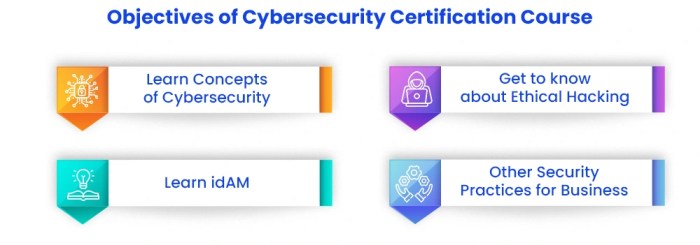
The realm of cyber security certifications is vast and diverse, catering to various skill levels and professional needs. As organizations increasingly prioritize their cybersecurity posture, obtaining certification has become a critical step for individuals looking to advance their careers in this field. Understanding the different types of certifications available can help you choose the right path to enhance your knowledge and skills.Cyber security certifications can be categorized based on their focus areas and levels of expertise.
Here’s a look at some of the most recognized certifications that you can pursue online, their prerequisites, duration, and associated costs.
Comparative Overview of Cyber Security Certifications, Cyber Security Certification Online Course
It’s essential to compare and analyze various certifications to make an informed decision. Below is a table summarizing the prerequisites, duration, and costs of some popular cyber security certifications.
| Certification | Prerequisites | Duration | Cost |
|---|---|---|---|
| CompTIA Security+ | None, but a foundational IT knowledge is recommended | Typically 3-6 months | $350-$400 |
| CISSP (Certified Information Systems Security Professional) | 5 years of work experience in two or more of the eight domains of the CISSP Common Body of Knowledge | 4-6 months | $699 |
| CEH (Certified Ethical Hacker) | Two years of work experience in the Information Security domain; or completion of an official EC-Council training | 3-5 months | $1,199 |
| CCSP (Certified Cloud Security Professional) | 5 years of IT experience, including 3 years in information security and 1 year in cloud security | 4-6 months | $599 |
“Certification is not just a piece of paper; it’s a recognition of your skills and commitment to the cybersecurity field.”
Industry-recognized certifications carry significant weight in the job market, often serving as a benchmark for employers when assessing candidates. Certifications like CISSP and CEH are particularly valued due to their rigorous standards and comprehensive coverage of essential security topics. These certifications not only validate a professional’s expertise but also enhance their credibility, making them more appealing to potential employers. Furthermore, many organizations view certifications as a testament to an individual’s dedication to staying current in a rapidly evolving field, thereby increasing their chances of career advancement and opportunities for higher salaries.
Curriculum and Course Structure
The curriculum for cyber security certification online courses is designed to equip learners with the essential skills and knowledge required to navigate the complexities of cybersecurity. These courses cover a wide range of topics that are vital for understanding and addressing current security challenges.The structure of these courses typically includes various essential modules that provide a comprehensive understanding of cybersecurity principles and practices.
Below is a detailed list of common topics covered in these courses:
Essential Modules in Cyber Security
The following modules form the backbone of most cyber security certification courses, ensuring that learners develop a holistic understanding of the field:
- Network Security: Focuses on protecting the integrity, confidentiality, and availability of computer networks through various strategies and tools.
- Risk Management: Teaches the identification, assessment, and prioritization of risks, alongside strategies to mitigate them.
- Cryptography: Covers the principles of encryption and decryption, focusing on how cryptographic techniques protect data.
- Incident Response: Discusses the procedures for responding to and managing security breaches or threats.
- Compliance and Legal Issues: Addresses the legal framework and regulations governing cybersecurity practices.
- Cloud Security: Explores the unique challenges and solutions associated with securing cloud environments.
- Vulnerability Assessment and Penetration Testing: Provides insight into identifying security weaknesses and testing the effectiveness of security measures.
Teaching methodologies in online cyber security courses incorporate a blend of various instructional techniques to enhance learning and engagement. A mix of theoretical knowledge and practical application is emphasized throughout the courses.
Teaching Methodologies
The teaching methodologies used in cyber security certification courses are diverse and include the following components:
- Video Lectures: Engaging video content delivers key concepts, often presented by industry experts to provide real-world insights.
- Quizzes and Assessments: Regular quizzes assess understanding and retention of the material, reinforcing learning through practical evaluation.
- Hands-on Labs: Simulated environments allow students to practice real-world scenarios, enhancing their problem-solving skills and technical capabilities.
- Discussion Forums: These platforms foster peer interaction, allowing learners to share insights, ask questions, and collaborate on projects.
The integration of these methodologies not only makes the learning experience more interactive but also ensures that students can apply their knowledge effectively in practical situations. By focusing on a structured curriculum and innovative teaching approaches, these courses prepare students for the dynamic challenges of the cybersecurity landscape.
Benefits of Taking Online Courses for Cyber Security Certifications
Pursuing cyber security certifications through online courses offers a range of benefits that cater to both aspiring and established professionals in the field. The digital learning environment allows for a more adaptable approach to education, aligning with the demanding schedules of today’s workforce. This format not only enhances learning opportunities but also provides practical benefits that can significantly impact one’s career trajectory.
Flexibility and Convenience
One of the most significant advantages of online courses is their inherent flexibility. Learners can access course materials from anywhere, at any time, allowing them to tailor their studies around personal and professional commitments. This is especially beneficial for individuals balancing work and family responsibilities.
- Self-paced learning: Students can progress through modules at their own speed, ensuring a thorough understanding of complex concepts.
- Accessibility: Online platforms often provide resources that can be revisited, enabling learners to review materials as needed.
- Global reach: Participants can connect with peers and instructors from around the world, enriching their learning experience through diverse perspectives.
Success Stories of Online Learners
Numerous professionals have successfully transformed their careers by completing online cyber security certifications. For instance, Jane Doe, an IT specialist, transitioned into a security analyst role after completing a comprehensive online course. Her journey illustrates the impact of flexible learning options that fit into busy lifestyles. Another notable example is John Smith, who, after earning his certification online while working full-time, was able to secure a managerial position in a leading tech firm.
These stories emphasize the effectiveness of online programs in providing critical skills and knowledge necessary for career advancement.
Cost-Effectiveness of Online Courses
Online cyber security certification courses typically present a more economical choice compared to traditional classroom settings. The reduction in travel expenses and time away from work means that learners can save both money and valuable time.
- Lower tuition fees: Many online programs have significantly reduced tuition costs due to lower overheads.
- No commuting costs: Students save on travel expenses, which can add up over time.
- Resource savings: Online courses often include free access to a variety of digital materials, reducing the need for expensive textbooks.
“The shift to online learning has not just opened doors for convenience but also for making high-quality education affordable and accessible.”
Overall, the benefits of taking online courses for cyber security certifications are clear. The flexibility, real-life success stories, and cost savings make these programs an attractive option for anyone looking to enhance their skills in this critical and in-demand field.
Recommended Online Platforms for Cyber Security Certifications
In today’s digital landscape, obtaining a cyber security certification is essential for career advancement in the field. Various online platforms offer a wide range of courses catering to different levels of expertise, allowing learners to enhance their skills at their own pace. This overview highlights some of the most popular platforms along with key features that can guide prospective learners in choosing the right course.When selecting a platform for cyber security certification, it is crucial to evaluate factors such as user ratings, course content, and pricing.
Below is a comparison of some of the leading online platforms to help you navigate your options.
Platform Comparison
The following platforms are known for providing quality cyber security courses. Here’s a brief comparison based on essential criteria:
| Platform | User Ratings | Course Content | Price |
|---|---|---|---|
| Coursera | 4.8/5 | University-level courses with specializations | Free to audit; certificates range from $39-$79 |
| Udemy | 4.7/5 | Diverse courses by industry professionals | Prices vary; often discounted, averaging $15-$200 |
| LinkedIn Learning | 4.5/5 | Short courses for quick skill updates | Monthly subscription at $29.99 or annual at $239.88 |
| edX | 4.6/5 | Courses from top universities; MicroMasters available | Free to audit; verified certificates around $150-$300 |
Each platform has unique offerings that cater to different learning styles and professional requirements. For example, Coursera’s courses are often structured in collaboration with recognized universities, providing a well-rounded academic experience. Udemy, on the other hand, offers a vast library of courses across various topics, allowing learners to select based on personal interest and relevance to their career. LinkedIn Learning is ideal for professionals looking for quick, succinct lessons that fit into a busy schedule, while edX provides an academic approach with the option for in-depth learning through MicroMasters programs.
“Verifying course accreditation and qualifications is essential to ensure the credibility of the certification.”
The significance of ensuring that the course is accredited cannot be overstated. Accreditation guarantees that the program meets recognized standards, which can enhance the value of the certification in the job market. Additionally, it provides assurance that the content is relevant and up-to-date with current industry practices, thus preparing learners for real-world challenges effectively. Always check the backgrounds of the instructors and the institutions offering the courses to ensure you are investing in high-quality education that aligns with your career goals.
Preparation Strategies for Cyber Security Certification Exams
Preparing for cyber security certification exams requires a strategic approach to ensure success. With the ever-evolving landscape of threats and technologies, a solid study plan can make a significant difference in mastering the material and passing the exam on the first attempt. This section will delve into effective study techniques, essential resources, and time management strategies.
Effective Study Techniques
Adopting effective study techniques is vital to retain intricate concepts and practices in cyber security. Here are some recommended strategies:
- Active Recall: Engage with the material by testing yourself frequently on key concepts, rather than passively reading or reviewing notes.
- Spaced Repetition: Utilize spaced repetition software to reinforce memory retention over increasing intervals. This method helps solidify knowledge long-term.
- Practical Labs: Hands-on labs provide real-world experience. Platforms like Cybrary and TryHackMe offer scenarios that deepen understanding of theoretical concepts.
- Study Groups: Collaborating with peers can enhance learning. Discussing topics and solving problems together encourages diverse perspectives and deeper insights.
Checklist of Resources for Exam Preparation
Gathering the right resources is crucial for comprehensive exam preparation. Below is a checklist of essential materials to consider:
- Books:
- “CompTIA Security+ All-in-One Exam Guide” by Darril Gibson
- “CISSP (ISC)2 Certified Information Systems Security Professional Official Study Guide” by James Michael Stewart
- Websites:
- Cybrary: Offers free and paid courses on various certifications.
- ExamCompass: Provides free practice exams and quizzes.
- Practice Exams: Invest in high-quality practice exam books or online resources like Boson or MeasureUp for realistic test simulations.
Time Management and Study Schedule
Effectively managing your time and creating a structured study schedule can greatly enhance your preparation efficiency. Here are some tips to help you organize your study time:
- Set Clear Goals: Define specific objectives for each study session, such as covering a particular topic or completing a practice exam.
- Create a Timetable: Develop a study schedule that Artikels what to study each day. Balance between theory and practice while allocating time for breaks to avoid burnout.
- Use Time-Blocking: Dedicate specific blocks of time to study, using techniques like the Pomodoro technique to maximize focus and productivity.
- Regular Reviews: Schedule regular review sessions to revisit previously studied content, reinforcing knowledge and identifying areas needing improvement.
Future Trends in Cyber Security Certifications: Cyber Security Certification Online Course
As the landscape of cybersecurity continuously evolves, so too do the requirements and frameworks surrounding cybersecurity certifications. Emerging trends illustrate a shift towards micro-credentials and specialization, which cater to the specific needs of the industry and the evolving threats organizations face. This transition underscores the necessity for professionals to stay ahead of the curve by pursuing relevant and timely educational opportunities.The ever-changing nature of cyber threats significantly influences certification requirements and course offerings.
New attack vectors, such as ransomware, phishing, and advanced persistent threats (APTs), necessitate a more dynamic approach to training, prompting the development of specialized certifications that focus on particular areas of expertise. Organizations are now seeking professionals who possess specific skill sets tailored to combat these sophisticated threats.
Emerging Trends in Cyber Security Certifications
The rising trend of micro-credentials highlights the shift towards bite-sized learning experiences aimed at developing specific skills quickly. These certifications allow professionals to adapt to the fast-paced cyber landscape without committing to lengthy courses. The importance of micro-credentials lies in their ability to:
- Provide targeted knowledge and skills relevant to immediate industry demands.
- Allow professionals to stack their credentials, creating a diverse portfolio of competencies.
- Facilitate continuous learning, enabling quick adaptation to new technologies and threats.
As cyber threats become increasingly sophisticated, certification programs must evolve to address these challenges. This shift includes the introduction of hands-on training and simulation-based assessments, which provide learners with the opportunity to practice their skills in real-world scenarios. By incorporating practical elements, certification programs ensure that candidates are not only theoretically knowledgeable but also equipped with the necessary skills to respond effectively to real cyber incidents.
Impact of Evolving Threats on Certification Requirements
The influence of emerging threats on certification requirements is profound. Cybersecurity certifications are now being tailored to address specific threats, resulting in a demand for specialized training in areas such as threat intelligence, cloud security, and incident response. This responsiveness to the threat landscape means that professionals must engage in continuous education to maintain their certifications and stay relevant in their fields.Organizations are increasingly looking for certifications that demonstrate a professional’s ability to manage the latest cybersecurity challenges.
Certifications from recognized bodies like (ISC)², CompTIA, and ISACA are adapting by incorporating newer technologies and practices such as artificial intelligence in security operations, zero-trust architectures, and compliance with data privacy regulations.
Role of Continuous Education in Maintaining Certification Relevance
Continuous education has become an essential component of maintaining the relevance of cybersecurity certifications. Given the rapid pace of change in technology and tactics employed by cybercriminals, ongoing training ensures that professionals remain current with the latest developments in the field. The following aspects highlight the importance of continuous education:
- Keeping skills up-to-date with the latest cybersecurity tools and methodologies.
- Understanding new regulatory requirements and compliance standards that impact the industry.
- Engaging with the cybersecurity community to share knowledge and best practices.
In addition, many certification bodies now require or strongly encourage continuing education credits to ensure that certification holders are actively improving their skills over time. This trend not only benefits professionals by enhancing their capabilities but also serves to strengthen the overall security posture of organizations as they benefit from a workforce that is informed and skilled in the latest cybersecurity practices.
“In cybersecurity, the only constant is change; continuous education is the key to staying relevant.”
Community and Networking Opportunities
In the dynamic field of cyber security, the significance of community engagement and networking cannot be overstated. For certification candidates and seasoned professionals alike, these networks provide invaluable resources, insights, and support that can greatly enhance one’s career trajectory. Building relationships within the cyber security community can open doors to job opportunities, collaborative projects, and shared learning experiences.Networking is essential for cyber security professionals to stay updated on emerging threats, technologies, and best practices.
Engaging with others in the field creates a platform for knowledge exchange, mentorship, and professional growth. Additionally, a robust network can be crucial for navigating the complexities of the cyber security landscape, where real-time information and collaborative problem-solving are key.
Online Forums and Social Media Groups
Online forums and social media groups serve as interactive platforms where cyber security enthusiasts and professionals can share insights, ask questions, and discuss the latest industry trends. These communities foster a sense of belonging and can significantly enhance learning opportunities. Some notable platforms include:
- Reddit
- LinkedIn Groups: Numerous LinkedIn groups focus on different aspects of cyber security, offering a space for professionals to connect and share insights.
- Discord Channels: These platforms host real-time discussions on cyber security topics, enabling members to collaborate and share resources instantly.
Professional Associations
Joining professional associations can provide access to a wealth of resources, including publications, training, and networking opportunities. Being part of an association often leads to enhanced credibility and professional visibility. Some prominent organizations in the cyber security field include:
- ISACA: Offers certifications, networking events, and resources focused on governance, risk, and compliance.
- ISC²: Known for its CISSP certification, this organization provides professional development and networking options.
- SANS Institute: Offers training and certifications, as well as opportunities to connect with industry experts and peers.
Webinars, Conferences, and Workshops
Participating in webinars, conferences, and workshops allows professionals to deepen their knowledge and expand their professional network. These events not only provide educational content but also present opportunities to meet industry leaders and peers. The benefits of attendance include:
- Exposure to Cutting-Edge Research: Conferences often feature presentations from leading experts, providing insight into the latest trends and technologies.
- Networking Opportunities: In-person and virtual events allow participants to connect with other professionals in the field, fostering relationships that can lead to collaboration.
- Hands-On Workshops: Many events offer practical sessions where attendees can develop skills and apply knowledge in real-world scenarios.
“The connections you make in cyber security can be as valuable as the skills you acquire.”
Concluding Remarks
In conclusion, the Cyber Security Certification Online Course not only offers a pathway to valuable certifications but also fosters a deeper understanding of the ever-changing cyber threat landscape. With the right preparation and resources, you can position yourself as a key player in safeguarding digital information and making a meaningful impact in the field of cyber security.
FAQ
What prerequisites do I need for the course?
Most cyber security certification courses have no strict prerequisites, but a basic understanding of IT concepts can be beneficial.
How long does it take to complete a certification?
The duration varies by certification, generally ranging from a few weeks to several months, depending on your pace and the course structure.
Are there any job placement services provided?
Many online platforms offer job placement services or career support to help you find opportunities after completing your certification.
Is financial aid available for these courses?
Yes, many online course providers offer financial aid options or payment plans to make courses more accessible.
What if I fail the certification exam?
Most certifications allow you to retake the exam after a waiting period, and many offer resources to help you prepare for a second attempt.

I am a professional writer with more than a decade of experience in creative and educational writing. Since the beginning of my career, I have been dedicated to developing works that are not only informative but also capable of providing deep understanding for readers from various backgrounds.