Online Teaching Degree Programs Certification takes center stage as a transformative opportunity for aspiring educators. With the rise of digital learning environments, pursuing an online teaching degree has become increasingly significant. These programs offer diverse paths, accommodating various educational needs and ensuring that future teachers are well-prepared for the evolving landscape of education. By choosing an online route, students can enjoy the flexibility of learning at their own pace while still obtaining the necessary qualifications to excel in their teaching careers.
Throughout this overview, we will explore the multitude of options available in online teaching degree programs, the vital certification requirements, and the potential career trajectories that await graduates. Additionally, we will address the importance of accreditation and the resources available to support online learners, ensuring a comprehensive understanding of this dynamic field.
Overview of Online Teaching Degree Programs
Pursuing an online teaching degree has become increasingly significant in today’s educational landscape. The flexibility and accessibility offered by online programs allow aspiring educators to gain the necessary qualifications while balancing personal and professional commitments. This evolution in educational delivery empowers individuals from diverse backgrounds to enter the teaching profession, contribute to their communities, and engage future generations.There are numerous types of online teaching degree programs available, each catering to different aspirations and educational needs.
Programs can range from associate degrees to master’s degrees, along with specialized certifications. These options provide pathways for individuals aiming to become teachers in various subjects and grade levels.
Types of Online Teaching Degree Programs
The diversity of online teaching degree programs enables potential educators to choose paths that align with their career goals. The following list Artikels the main types of programs available:
- Associate Degrees in Education: A foundational program that typically takes two years to complete, ideal for those starting their teaching careers or looking to work as teaching assistants.
- Bachelor’s Degrees in Education: This four-year degree provides comprehensive training in teaching methodologies, classroom management, and subject-specific knowledge.
- Master’s Degrees in Education: Advanced programs for those who already possess a bachelor’s degree and seek to specialize in fields such as curriculum development or educational leadership.
- Certificates in Teaching: Shorter programs that focus on specific skills or areas of teaching, perfect for current educators seeking professional development.
- Alternative Certification Programs: Designed for individuals who hold a degree in another field but wish to transition into teaching, these programs may expedite the certification process.
Obtaining a teaching degree online offers several notable benefits compared to traditional, in-person methods. One significant advantage lies in the flexibility of online learning, which allows students to access course materials and complete assignments according to their schedules. This adaptability is particularly beneficial for those with work or family commitments. Another key benefit is the broad range of resources available through online platforms.
Students often have access to digital libraries, interactive learning tools, and virtual study groups, enhancing their overall educational experience. Additionally, online programs often offer lower tuition fees and eliminate commuting costs, making education more affordable.
“Flexibility and accessibility provided by online teaching degrees create opportunities for aspiring educators to flourish in their careers.”
Certification Requirements for Online Teaching Degrees
Pursuing an online teaching degree is a significant step toward becoming an educator in today’s digital landscape. However, obtaining the necessary certification to teach varies by region and involves several key requirements that aspiring teachers should be aware of. Understanding these requirements is crucial for anyone considering a career in online education.The journey to obtaining teaching certification after completing an online degree often involves a series of steps designed to ensure that candidates meet the professional standards expected of educators.
Initially, graduates must apply for certification through their respective state or country’s education department. This process typically includes submitting proof of education, passing specific examinations, and completing background checks. Depending on the jurisdiction, additional requirements such as student teaching experience or professional development courses may also be necessary.
Common Certification Requirements
The certification process for online teaching degrees includes various common requirements that candidates need to fulfill. These requirements serve to standardize the qualifications of educators and maintain the quality of education. Key elements often include:
- Educational Attainment: Candidates must hold at least a bachelor’s degree in education or a related field, often from an accredited institution.
- Examinations: Many states require candidates to pass standardized exams that assess their knowledge of teaching practices, content areas, and pedagogy.
- Background Checks: A thorough background check is mandated to ensure the safety of students, which often includes fingerprinting and criminal history evaluations.
- Student Teaching Experience: Some programs require candidates to complete a certain amount of supervised teaching experience, allowing them to apply their skills in a real classroom setting.
- Continuing Education: To maintain certification, educators may need to engage in ongoing professional development and training throughout their careers.
Differences in Certification Across States and Countries, Online Teaching Degree Programs Certification
Certification requirements for online teaching degrees can significantly differ from one state to another, and even more so when considering international standards. These differences stem from varying educational policies and regulations designed to address local needs and contexts. For instance, in the United States, each state has its own licensing board, which sets forth unique requirements. Some states may require additional tests or specific coursework, while others might accept alternative assessments.
For example, states like California may have more rigorous requirements compared to others like Texas, which could offer more flexibility in certification pathways.Internationally, countries have established distinct frameworks for teacher certification. In the United Kingdom, for example, prospective teachers must complete a Qualified Teacher Status (QTS) assessment, while in countries like Finland, teaching certifications are typically granted post-graduation through a more holistic evaluation system focused on academic performance and personal qualities.Understanding these variances is essential for individuals pursuing online teaching degrees, as it influences how they plan their educational and professional trajectory.
Curriculum and Course Structure
Online teaching degree programs present a well-rounded curriculum designed to equip future educators with essential skills and knowledge. The coursework typically blends educational theory with practical training to prepare candidates for various teaching environments. This structure is integral to nurturing competent educators who can thrive in a digital learning landscape.
Typical Courses Included
The courses in online teaching degree programs generally encompass a solid foundation in educational principles, pedagogy, and technology integration. Below are the essential subjects commonly included in these programs:
- Foundations of Education: Introduces the history, philosophy, and sociology of education.
- Instructional Design and Technology: Focuses on creating effective learning experiences through technology.
- Assessment and Evaluation: Covers techniques for evaluating student performance and learning outcomes.
- Classroom Management: Strategies for creating a positive and productive learning environment.
- Diverse Learners: Understanding the needs of various student populations, including special education and ESL.
Elective Courses
In addition to the core curriculum, many programs offer elective courses to allow students to tailor their education. These electives may include topics such as:
- Curriculum Development: Crafting effective curricula to meet diverse learner needs.
- Online Teaching Strategies: Techniques specific to engaging students in an online environment.
- Educational Psychology: Insights into cognitive development and learning processes.
- Leadership in Education: Skills for educational leadership and administration roles.
Practical Components
Practical experience is a vital aspect of online teaching degree programs, enabling students to apply theoretical knowledge in real-world settings. These components often include:
- Student Teaching: A supervised teaching experience where candidates gain hands-on practice in classrooms.
- Internships: Opportunities to work in educational settings, enhancing skills and professional networks.
- Capstone Projects: Comprehensive projects that synthesize learning and demonstrate competency in teaching.
Practical experiences bridge the gap between theory and practice, ensuring that graduates are ready for the challenges of modern classrooms.
Accreditation and Quality Assurance

Accreditation is a crucial aspect of online teaching degree programs, acting as a hallmark of quality and credibility. It ensures that the educational institution meets established standards of excellence and that the education you receive is recognized and respected in the field. Without proper accreditation, graduates may find it challenging to secure employment or pursue further education, as employers and academic institutions often prioritize accredited programs.The verification of a program’s accreditation status is essential for prospective students.
To confirm whether an online teaching degree program is accredited, you can follow several steps. Start by checking the institution’s official website, which typically lists its accreditation status. Next, consult reputable databases and resources such as the U.S. Department of Education’s database of accredited postsecondary institutions and programs. This resource provides a comprehensive list of recognized accrediting bodies and their accredited programs.
Additionally, seeking opinions from current students and alumni can offer insights into the program’s reputation and quality.
Recognized Accrediting Bodies in Education
Understanding which accrediting bodies are reputable is vital when selecting an online teaching degree program. Recognized accrediting organizations ensure that programs maintain high educational standards. Here are some of the notable accrediting bodies in education:
- Council for the Accreditation of Educator Preparation (CAEP): Focused on the accreditation of teacher preparation programs, CAEP ensures that educators receive quality training.
- National Council for Accreditation of Teacher Education (NCATE): Merged with CAEP, NCATE previously established standards for teacher education programs and remains influential in setting quality benchmarks.
- Regional Accrediting Organizations: These include organizations such as the Middle States Commission on Higher Education (MSCHE), Southern Association of Colleges and Schools Commission on Colleges (SACSCOC), and Western Association of Schools and Colleges (WASC). Each region has its accrediting body that evaluates institutions within its geographic area.
- Distance Education Accrediting Commission (DEAC): This body specializes in accrediting distance education programs, ensuring they meet specific quality standards essential for online learning.
The significance of choosing an accredited program cannot be overstated. Graduates from accredited programs are often viewed more favorably by employers, and their qualifications are typically recognized by other educational institutions if they wish to continue their studies. The assurance of quality that accreditation provides is fundamental to the integrity of the education system and the professional advancement of educators.
Career Opportunities with an Online Teaching Degree
Graduates of online teaching degree programs find themselves equipped with a variety of skills applicable across multiple educational roles. As the landscape of education evolves, so do the opportunities available to those who have pursued their degrees online. This flexibility not only broadens the career horizons for graduates but also allows them to engage in meaningful work that aligns with their passions.The realm of education offers diverse career paths, each with unique responsibilities and salary expectations.
Below are some of the prominent roles available for graduates, along with insights into their earning potential and prospects for advancement.
Career Paths in Education
Graduates can explore a multitude of career options within the education sector. Here are some primary roles that individuals with an online teaching degree might pursue:
- Classroom Teacher: Typically working in public or private schools, classroom teachers are responsible for delivering lessons, assessing student progress, and creating a positive learning environment. The average salary for classroom teachers in the U.S. is around $60,000 annually, with potential for higher earnings based on experience and location.
- Instructional Coordinator: These professionals develop educational material and oversee school curriculums. The average salary for instructional coordinators is approximately $68,000 per year, reflecting their specialized role in enhancing educational quality.
- Educational Consultant: Often working independently or with organizations, educational consultants provide expert advice on curriculum development and teaching strategies. Their earnings can vary widely, but many consultants charge between $50 to $150 per hour, resulting in substantial income based on their clientele.
- Online Course Developer: With the rise of e-learning, online course developers create instructional materials and digital courses. Salaries can range from $50,000 to $100,000 or more, depending on experience and the complexity of the courses they create.
- Higher Education Administrator: These roles, which include positions like admissions officers and registrar, typically require advanced degrees. The average salary in this category is around $75,000, with significant advancement opportunities as one gains experience.
The salary expectations for these roles will depend heavily on factors such as location, the level of education attained, and the specific duties of the position.
Salary Comparisons and Advancement Potential
Understanding the salary landscape is crucial for anyone considering a career in education. Here’s a brief comparison of typical salaries for various roles:
| Career Path | Average Salary (USD) |
|---|---|
| Classroom Teacher | $60,000 |
| Instructional Coordinator | $68,000 |
| Educational Consultant | $50-$150/hour |
| Online Course Developer | $50,000 – $100,000+ |
| Higher Education Administrator | $75,000 |
Advancement opportunities in education are considerable, especially for those who continue their education and seek additional certifications. Graduates may pursue specialized roles or leadership positions, such as becoming a principal or a dean of students, often leading to increased responsibility and higher salaries. An important consideration for career progression in education is the value placed on continued professional development and networking in the field.
“Education is the passport to the future, for tomorrow belongs to those who prepare for it today.” – Malcolm X
Challenges and Considerations: Online Teaching Degree Programs Certification
Online teaching degree programs present a range of challenges that can impact students’ learning experiences. These hurdles often stem from the unique nature of online education, requiring students to adapt to a different learning environment than traditional classrooms. Understanding these challenges is crucial for navigating an online degree successfully.One common challenge faced by students in online teaching degree programs is the lack of face-to-face interaction with peers and instructors.
This absence can lead to feelings of isolation and disconnection, making it harder to engage with the material. Additionally, the self-directed nature of online learning requires a high degree of personal discipline, which can be difficult for many students to maintain over extended periods.
Time Management Strategies for Online Learners
Effective time management is essential for success in online degree programs. Without the structure of a traditional classroom, students may struggle to allocate their time efficiently. Implementing strong time management strategies can help students balance their studies with personal and professional commitments. Here are some effective techniques:
- Set a Regular Schedule: Establishing a dedicated study schedule can create a routine that promotes consistent learning.
- Prioritize Tasks: Identifying urgent assignments and breaking them down into manageable steps can alleviate overwhelming feelings.
- Utilize Digital Tools: Tools such as calendars, task lists, and time-tracking apps can help students stay organized and focused on their goals.
Maintaining Engagement and Motivation During Online Studies
Staying engaged and motivated in an online learning environment can be challenging due to the absence of in-person stimulation and accountability. To combat this, students can employ several strategies to enhance their online learning experience:
- Set Personal Goals: Establishing specific, achievable goals for each study session can provide a sense of accomplishment and direction.
- Participate Actively: Engaging in discussions, joining study groups, and collaborating with classmates can foster a sense of community and enhance learning.
- Incorporate Breaks: Short breaks during study sessions can help maintain focus and prevent burnout, allowing students to return to their work refreshed.
- Create a Conducive Learning Environment: Designing a dedicated study space that minimizes distractions can significantly enhance concentration and productivity.
Resources and Support for Online Learners
Online learning can sometimes feel like navigating a vast ocean without a map. However, a plethora of resources and support systems are in place to enhance the experience for students pursuing online teaching degrees. By utilizing these tools, learners can maximize their potential and achieve their academic goals.A variety of resources are available to bolster the online learning experience. These resources range from academic support to technological tools that facilitate interactive learning.
By recognizing and leveraging these options, students can create a more enriching educational journey.
Essential Resources for Online Learning
The right resources can significantly enhance an online learner’s experience. Here are some essential tools and platforms that can aid in the educational process:
- Learning Management Systems (LMS): Platforms like Canvas, Blackboard, and Moodle provide a centralized hub for course materials, assignments, and communication between instructors and students.
- Online Libraries and Databases: Access to resources such as JSTOR, Google Scholar, and university library databases allows students to research academic materials and peer-reviewed articles.
- Virtual Classrooms: Tools like Zoom or Microsoft Teams enable real-time interaction, fostering a classroom environment despite geographical barriers.
- Academic Journals and Publications: Staying updated with the latest research in education through journals can provide insights and foster innovative teaching practices.
Support Services Offered by Online Institutions
Support services play a crucial role in enhancing student success by providing necessary assistance. Online institutions typically offer several types of support, ensuring learners have the resources they need when challenges arise:
- Technical Support: Dedicated help desks assist students with any technical issues related to their online courses or platforms.
- Academic Advising: Advisors help students navigate their coursework, suggest resources, and assist with long-term educational planning.
- Writing Centers: Many institutions provide writing support, offering feedback on assignments to improve writing skills and ensure clarity.
- Career Services: Resources for job placement, internships, and networking opportunities are often available to help graduates transition smoothly into their careers.
Professional Organizations for Networking Opportunities
Networking plays a vital role in professional development, and several organizations focus on online teaching that provide avenues for connection and growth. Engaging with these organizations can enhance a learner’s professional journey:
- Online Learning Consortium (OLC): This organization provides resources, research, and conferences for those involved in online education.
- Association for Educational Communications and Technology (AECT): AECT offers networking opportunities for professionals interested in the intersection of technology and education.
- International Society for Technology in Education (ISTE): ISTE focuses on the use of technology in education, providing resources, standards, and professional development.
- American Association of University Professors (AAUP): This organization advocates for higher education professionals and provides networking opportunities across various disciplines.
Future Trends in Online Teaching Degrees
The landscape of online education is evolving at a rapid pace, with numerous trends shaping the future of teaching degrees. As educational institutions adapt to new technologies and learner preferences, online teaching programs must respond to these changes to remain relevant and effective. This section delves into the emerging trends, technological advancements, and the increasing demand for online educators, shedding light on what the future holds for online teaching degrees.
Emerging Trends in Online Education
The rise of online education has given birth to several key trends that are transforming how teaching degrees are delivered and perceived. These trends not only reflect changes in technology but also shifts in societal attitudes towards education. A few notable trends include:
- Microcredentials and Digital Badges: More institutions are offering microcredentials, allowing educators to gain recognition for specific skills or knowledge areas. This flexibility caters to professionals seeking targeted qualifications.
- Personalized Learning: Advances in data analytics and AI enable a more tailored educational experience, allowing instructors to address individual learning needs effectively.
- Increased Collaboration: Online programs are increasingly incorporating collaborative tools that allow educators to work together across geographical boundaries, enhancing the learning experience.
- Hybrid Learning Models: Many institutions are blending online and in-person learning, offering a more versatile approach to education that caters to diverse learning preferences.
Technological Advancements Influencing Online Teaching Programs
Technological innovations are at the forefront of reshaping online teaching degrees. These advancements facilitate more engaging and effective teaching and learning experiences. Key technologies influencing the future include:
- Virtual Reality (VR) and Augmented Reality (AR): These technologies allow educators to create immersive learning environments that can enhance understanding, particularly in fields like science and history.
- Artificial Intelligence (AI): AI can provide real-time feedback and support for students, improving the teaching and learning process significantly.
- Learning Management Systems (LMS): Enhanced LMS platforms are streamlining course management and providing analytical tools that help educators track student performance effectively.
- Mobile Learning Apps: The proliferation of mobile technology is making education more accessible, allowing students to learn anytime and anywhere.
Growing Demand for Online Educators
As educational delivery methods evolve, there is a burgeoning need for qualified online educators. This demand reflects a shift towards flexible learning environments where students can balance education with other commitments. Several factors are contributing to this increased demand:
- Global Reach: Online education allows institutions to attract students from around the world, creating a greater need for educators who can navigate diverse cultural contexts.
- Increased Enrollment: The surge in online courses has led to higher enrollment numbers, necessitating more instructors to manage larger student populations.
- Shift in Skill Requirements: As industries evolve, there is a growing demand for educators who can teach emerging skills relevant to the current job market.
“Embracing these trends and technologies is crucial for educators looking to thrive in the evolving landscape of online education.”
Last Point
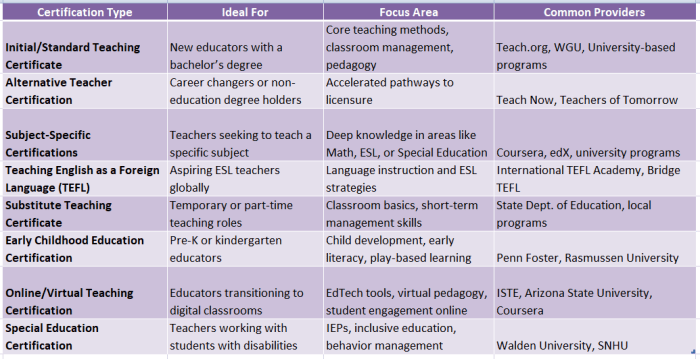
In summary, Online Teaching Degree Programs Certification opens doors to a myriad of opportunities for individuals passionate about education. By navigating the requirements, understanding the curriculum, and leveraging available resources, aspiring teachers can successfully embark on their professional journey. As the demand for online educators continues to grow, embracing these programs not only enhances personal growth but also contributes to the future of education itself.
Essential Questionnaire
What types of online teaching degrees are available?
There are various online teaching degrees available, including Associate, Bachelor’s, Master’s, and Doctoral programs, each catering to different levels of education and specialization.
How do I choose the right online teaching program?
Consider factors such as accreditation, course offerings, faculty qualifications, and student support services to find a program that fits your needs and career goals.
Can I teach in a different state with an online degree?
Yes, but you may need to meet specific certification requirements for the state where you wish to teach, as they can vary widely.
What support services do online teaching programs offer?
Many online programs offer tutoring, academic advising, technical support, and access to career services to help students succeed.
Is accreditation important for online teaching degrees?
Yes, accreditation ensures that the program meets certain quality standards, which is important for both your education and future employability.
